Most founders we talk to right now are somewhere in the middle of figuring this out. They've added some AI tools to their recruiting workflow. Maybe a lot of them. And underneath all of it, there's a real question: is this actually making me better at hiring, or am I just moving faster through the same process?
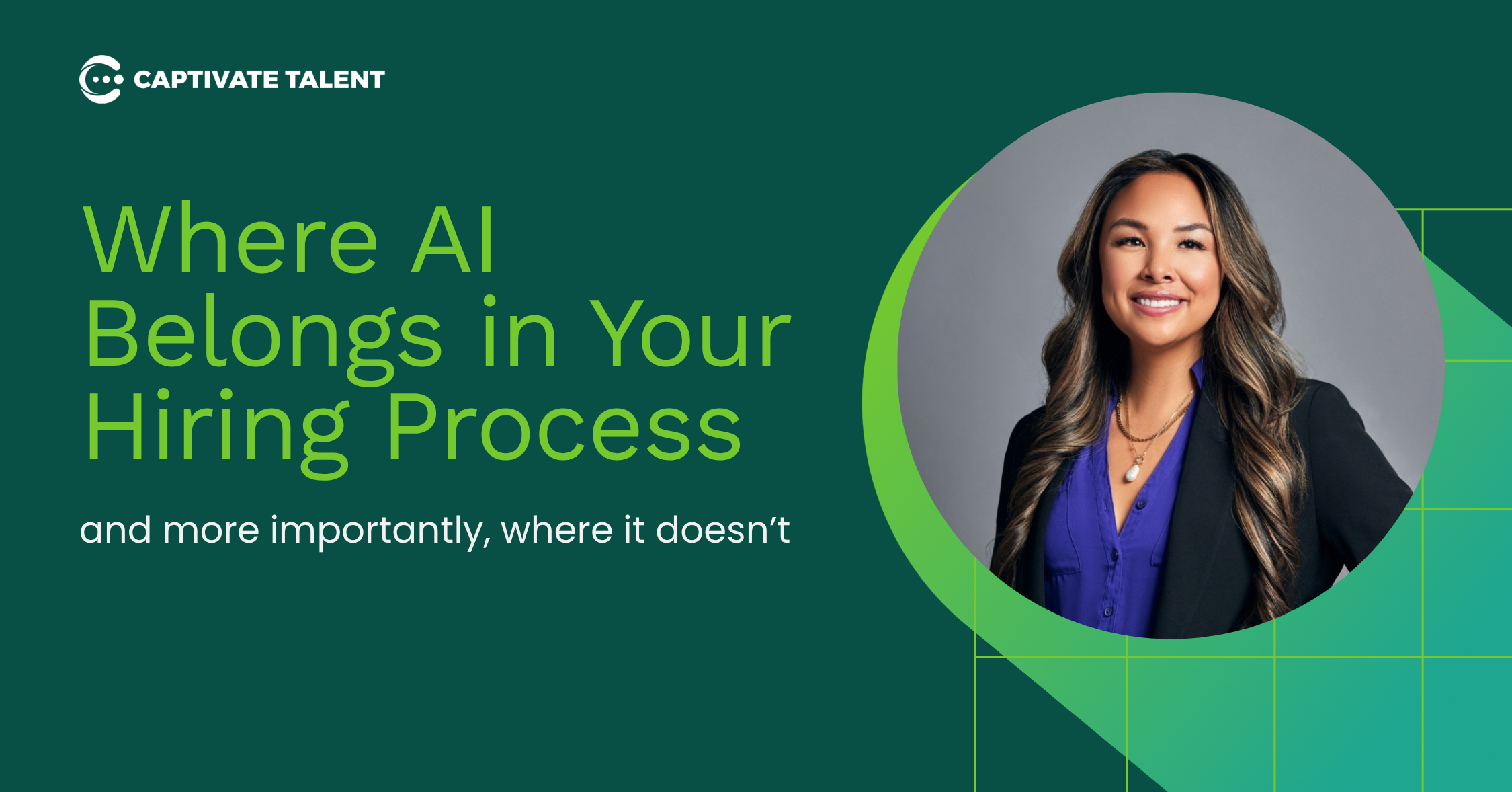
Cassie Chao Leemans has spent more time thinking through this than most. She's the VP of Talent at Craft Ventures, a recruiter who scaled teams at Uber, Palantir, and Threads, and someone who built her own AI-native recruiting system from scratch. She came on the Human First podcast recently, and the part of the conversation that stuck with us was how clear she is about where AI earns its place and where it doesn't.
The back-end stuff? Automate it.
Cassie is completely on board with using AI for the repetitive work that doesn't require a human to be present.
Scheduling links. Pulling context before a call. Surfacing candidates from a database based on a job description. Organizing inbound. These are tasks that, added up across a week, represent a real drain on focus and time.
Her own system does this well. She pastes a job description into her CRM and gets back ten candidates with an explanation of why each one was surfaced, filtered to people she's spoken with recently. What used to take days of manual clicking now takes minutes.
If you're doing any of that manually, there's no argument against automating it. The tools exist. They work.
Surfacing candidates and choosing them are two different things.
This is where the line gets drawn.
AI can help you find people. It can't tell you who to hire. Cassie is direct about this:
"Don't let AI make decisions for you... There's going to be false negatives. There's going to be false positives. You should still be the one to identify across the board why someone is being filtered out."
The issue isn't the technology. It's that the model doesn't have what you have. Fifteen years of recruiting conversations. Or three years of building your specific company. You know things about people you've met that never made it into a note anywhere. You have a read on fit that no tool can replicate, because the tool hasn't had those conversations.
When AI makes the call, you're not just being efficient. You're skipping the part that actually determines whether the hire works.
The inbound problem is making this harder, not easier.
AI-generated applications have flooded pipelines. What used to be five inbound applicants is now five thousand, many with resumes AI-optimized to match a job description perfectly.
So the candidates who look great on paper are harder to assess than ever. And if you're relying on AI to filter that volume, you're essentially running one algorithm through another, with no human ever in the room.
We see teams stack ranking profiles without anyone reading through them. It's understandable when the volume is overwhelming. But it tends to compound: you miss people who don't look like obvious fits on paper, you advance people who've gamed the filter, and the pipeline gets noisier, not cleaner.
AI-written scorecards are where it gets genuinely risky.
This is the thing Cassie is most concerned about right now.
Scorecards written by AI after an interview. Decision matrices built on signals a model identified. Hiring choices informed entirely by what a tool concluded rather than what a human observed.
"Should you not be the one evaluating?" she said. "This person collaborated with me in this way, versus an AI saying, these are signals that this person's collaborative. That's not your own definition or your own set of values of what it is."
The scorecard isn't a formality. It's where you put into words what you actually saw, what you believe about whether this person fits your team and your culture. That's not a step you can hand off without losing something real.
Founders still have to show up.
We see this pattern a lot on our side of the table. A founder hires a recruiter or a search firm and steps back, expecting the outcome without staying in the process.
Cassie's time at Threads showed her what the other version looks like. Her founders were fully invested. They got on first calls for high-priority candidates. They could sell the vision. Their close rate was over 90%.
That's not a coincidence. The candidates could tell someone cared enough to be there.
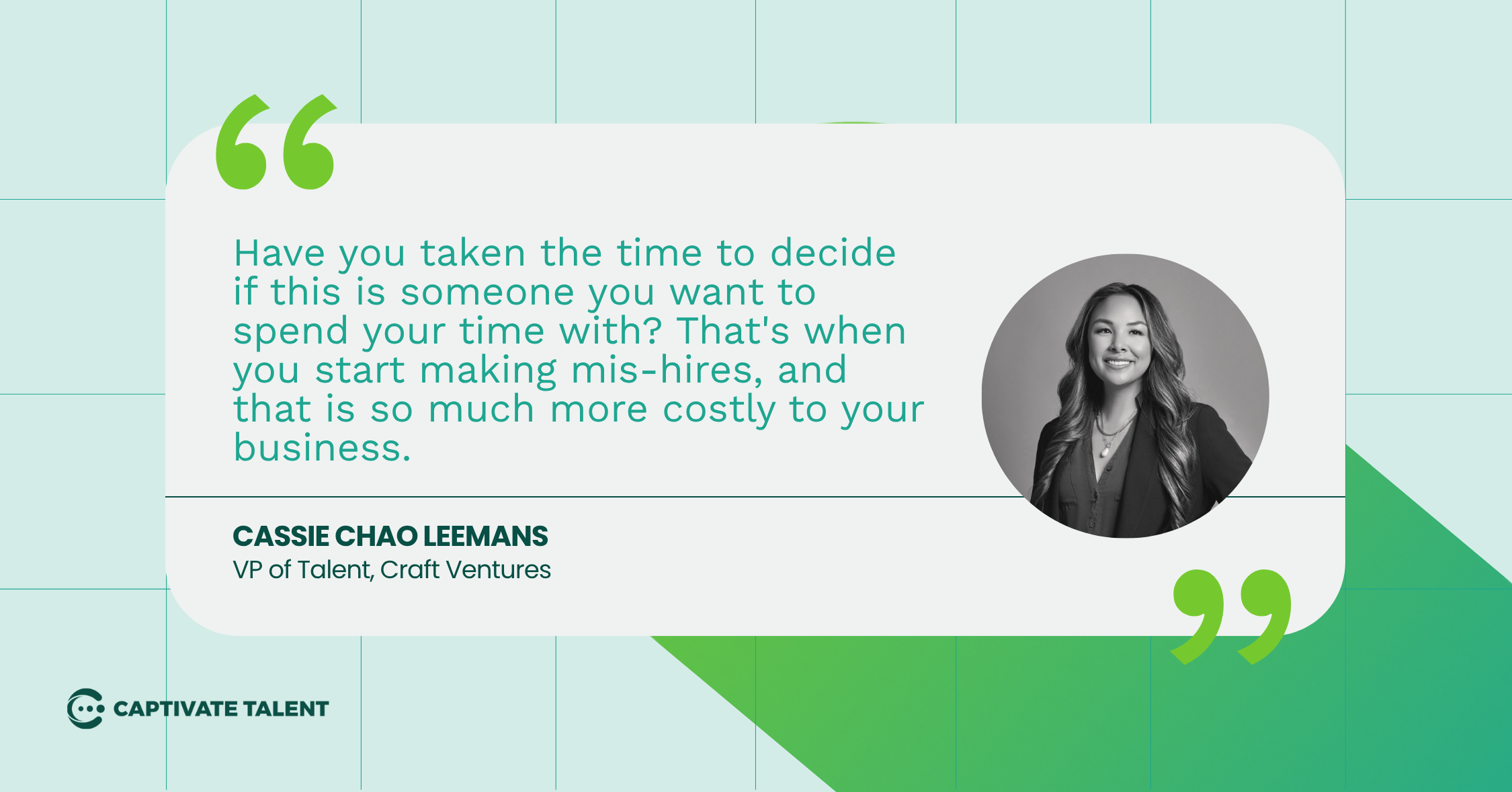
"If founders are heavily relying on a computer bot to tell them, we should look at this profile," Cassie said, "have you taken the time to read through it and decide if this is someone you want to spend your time with? That's when you start making mis-hires, and that is so much more costly to your business."
The same logic holds whether AI is doing the screening or a recruiter is carrying the whole process alone. Founders still need to be in it.
The simple version.
Automate what doesn't need your judgment. Protect what does.
Back-end logistics, scheduling, initial surfacing: hand it off. The more of that you clear, the more attention you have for the conversations that actually matter.
Screening decisions, evaluation, close conversations, the real read on whether someone belongs on your team: that stays with you.
AI gets you to the right conversations faster. It doesn't replace them.