You hired your first salesperson because you couldn’t keep doing every sales call yourself. A few weeks in, they’re asking you to help prepare for a demo, explain a technical objection, and work through a deal that’s gone quiet.
You expected some ramp time. You’re less sure how much of your involvement is normal, or when helping starts to mean the hire isn’t working.
That’s a difficult question to answer if the expectation was simply that someone would “take sales off your plate.” There are several jobs inside that sentence, and they won’t all move over at once.
A first seller can take responsibility for customer conversations and move deals forward while still relying on knowledge that lives with the founder. Being clear about that support before hiring makes it easier to choose the right person and judge how they’re doing.
A seller can own the deal while you help behind the scenes
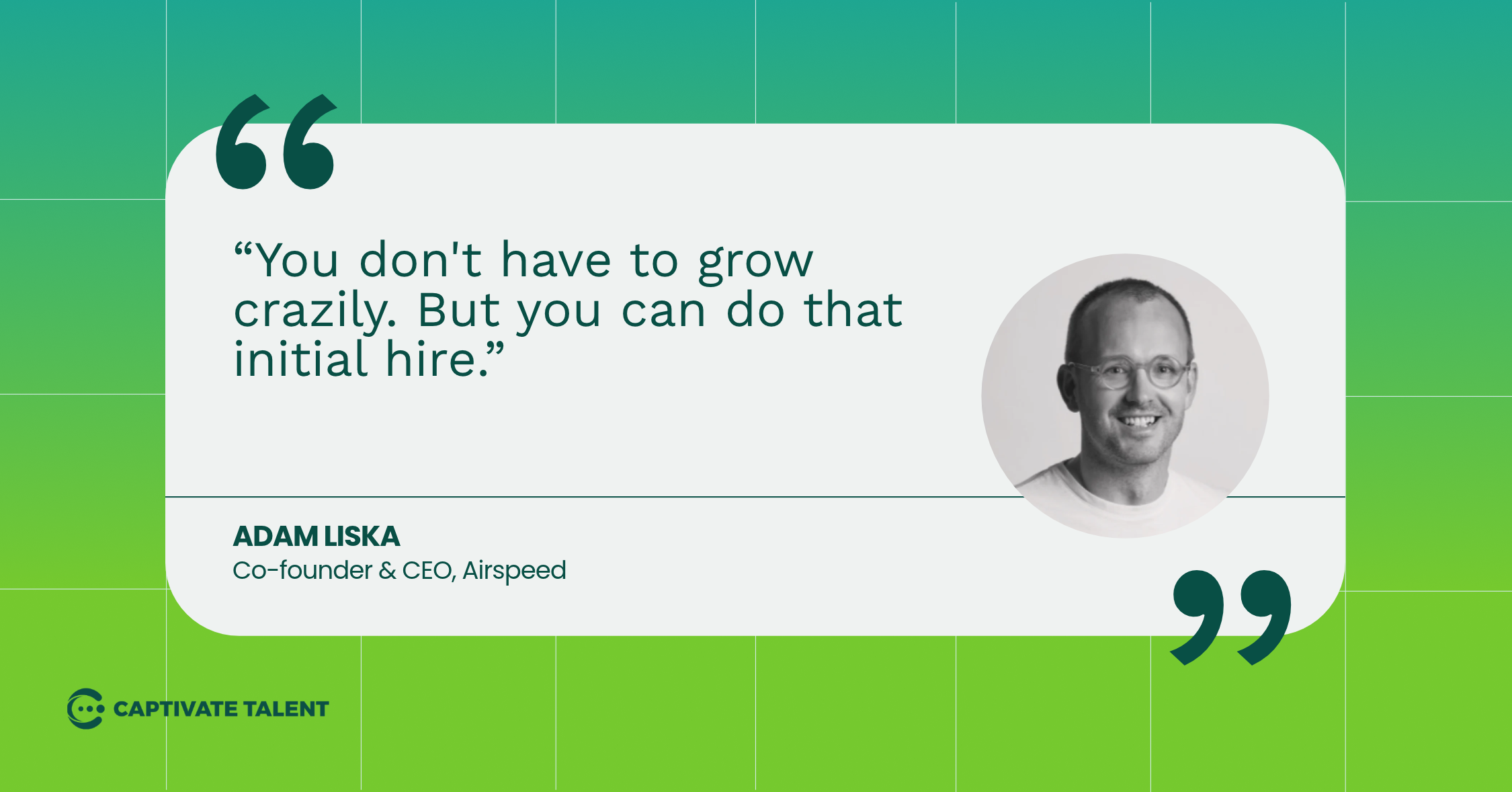
At Airspeed, co-founder and CEO Adam Liska saw this happen before the company formally hired a salesperson. Felix, who worked in business operations, wanted sales experience and began taking calls as the founders ran short on capacity.
He went on to close the company’s first high five-figure deal without a founder involved in the customer conversations. But Adam and his co-founder were coaching him in the background, helping him prepare for each next conversation.
That arrangement gave Felix real responsibility. He had to understand the buyer, carry the conversation, and earn the decision. The founders’ involvement helped him do it.
For a founder making an early hire, that’s a useful picture of progress. You might stop attending every call before you stop discussing every significant deal. Your calendar gets some room back, even though your judgment is still part of the process.
Agree on where that judgment will be available. A regular deal review can give a seller somewhere to bring questions and help you see whether they’re learning to handle similar situations themselves.
Make your customer knowledge available
Founder-led sales creates a lot of knowledge that never makes it into a CRM. You remember why a customer hesitated, which product limitation mattered, and what finally made the purchase feel worthwhile.
A new seller sees the closed deal. They may have very little access to the thinking that got it there.
Before Airspeed hired externally, experienced sales advisors reviewed recordings of the founders’ sales calls. They used those conversations to help define the candidate profile and interview process.
The same material can help someone learn the job once they arrive. Choose calls that show the work they’ll actually need to do. Include a deal that stalled, or a conversation where you discovered the buyer wasn’t a good fit. Explain what you noticed and why you chose a particular next step.
A polished pitch deck can explain the product. Hearing how you respond when a buyer challenges it gives a seller something else to learn from.
You don’t need a finished sales handbook to make this useful. Start with the conversations and decisions you find yourself explaining repeatedly.
Give them somewhere credible to start
Your first seller will learn things you haven’t figured out yet. They still need a starting point that goes beyond a revenue target.
Adam’s advice to founders considering a hire was to examine their existing customers and pipeline. Where were conversations coming from? What seemed to be working? Were there similarities among the customers they could build on?
He put the question simply:
“But is there some clusters of similarity among your customers that you think you can scale?”
That leaves room for an evolving view of your ideal customer. You can have a promising group of buyers without being certain it’s the only market you’ll ever serve.
For the incoming seller, make your confidence and uncertainty visible. Perhaps operations leaders have been buying for a consistent reason, while conversations with finance teams remain exploratory. Say so. Otherwise, someone can spend weeks treating both as equally proven opportunities.
If every new prospect requires a different explanation of who the product serves, the seller’s job includes substantial discovery. That affects the experience you need to hire and the results you can reasonably expect during ramp.
Product access is part of sales support
At Airspeed, early buyers wanted detailed conversations about AI and to see the product working. The company looked for sellers with product curiosity alongside sales experience.
Even a curious, capable seller needs access to people who can answer questions they haven’t encountered before.
Adam saw the effect when Airspeed expanded its team to New York. In London, sellers sat alongside engineers. When a technical question came up, they could walk over and discuss it. The New York team didn’t have that same access, which created friction during ramp.
“Whenever there's a question about a deal, you immediately just go to your favorite engineer or you might be you just grab the first one that's available and discuss that problem with them.”
Airspeed responded with engineering rotations in New York and regular time together across the offices. Adam also described plans to hire customer engineers there.
Your arrangement may look different. What matters is whether a seller knows who can help, how to reach them, and when to expect an answer. “Ask whenever you need something” can leave a new hire guessing, especially when everyone looks busy.
Agree on how your involvement should change
Support is easier to assess when you can see what it’s helping someone take over.
Early on, you might prepare for a call together. Later, the seller brings a proposed approach and asks you to challenge it. Eventually, they handle familiar situations independently and involve you when something unusual comes up.
The timing will depend on the product and the sales cycle. But that progression gives you something more useful to discuss than whether the seller still “needs too much help.” Are they applying what they’ve learned? Are questions becoming more specific? Can they recommend a next step?
It also gives you a way to examine your side of the relationship. If the same question keeps coming back, the answer may be hard to find, inconsistent, or changing with the product.
Your first sales hire will reveal how much of the company’s commercial knowledge still lives in your head. Helping them use that knowledge is part of the handoff. Over time, you should be able to see them making more of those decisions themselves.