We’ve spent this year talking with GTM leaders about how AI is changing their teams, while helping companies hire for roles where the expectations for AI fluency keep rising.
This is the third functional deep dive in our AI-native hiring series, following our guides to Sales and RevOps. It builds on our broader GTM hiring rubric to help you understand what AI-native looks like in marketing, how it changes the profile you need, and how to evaluate it beyond the tools listed on a résumé.
This guide hits especially close to home for me. I lead marketing at Captivate Talent, and I’ve spent the past 10 years working in the function. I’m figuring out what this shift means for my own work at the same time our recruiting team is seeing it show up in marketing searches.
Marketing is a particularly complicated place to answer the question: What does “AI-native” actually mean?
It’s one function that encompasses a lot of different disciplines. Product marketing, content, brand, demand generation, and growth each require different expertise. Even before AI, hiring your first marketer meant deciding which of those strengths your business needed most, and how much one person could reasonably cover.
If you spend enough time on LinkedIn, it’s easy to come away thinking every marketer can suddenly become an entire marketing department.
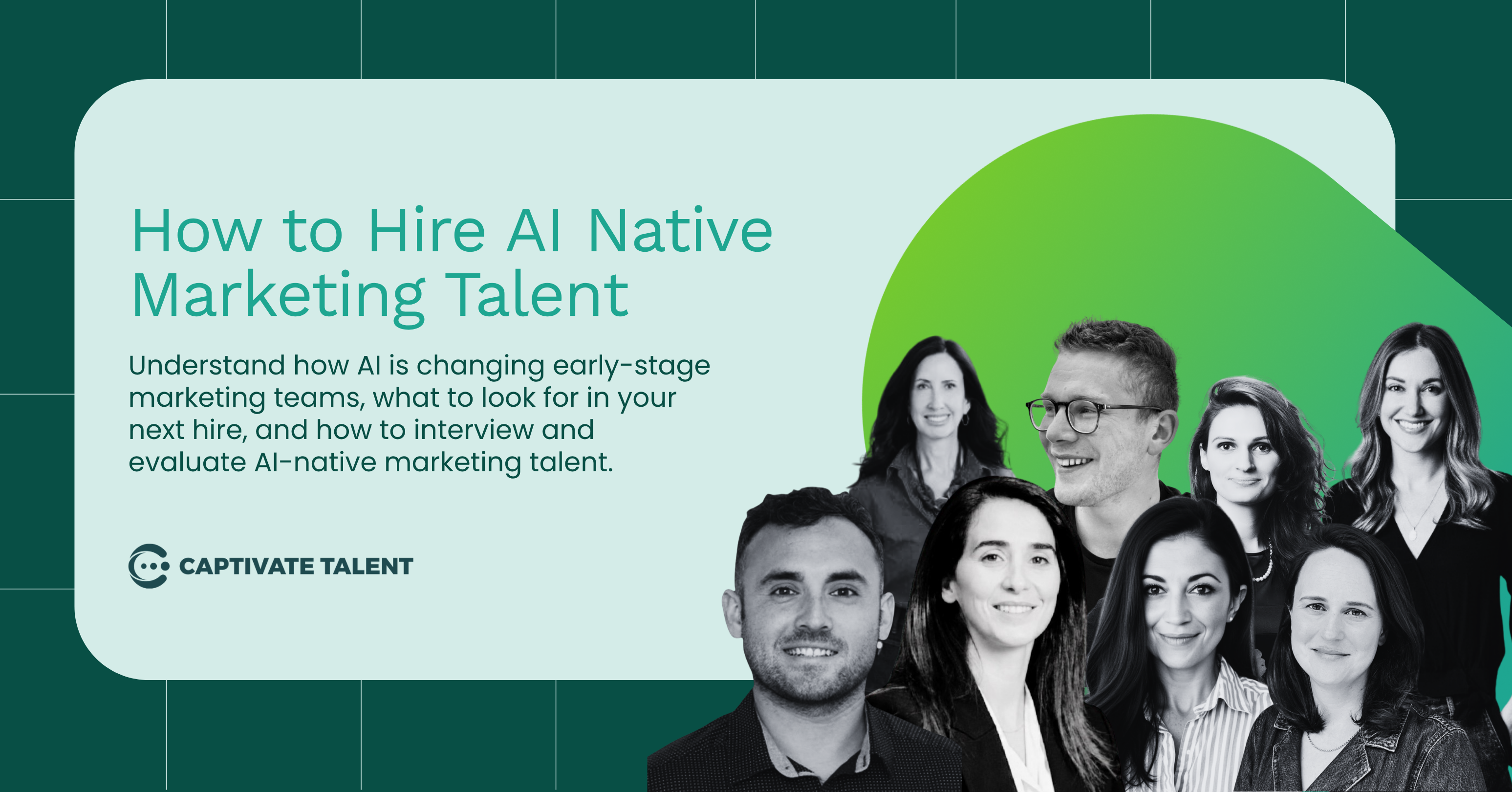
That’s not what we’re finding in our searches or with the leaders we spoke to who are actively navigating this shift: hiring, building teams, and working through where AI helps and where human expertise still matters. We brought their perspectives together with what our recruiters are seeing in real searches:
- Jessica Rosenberg, Head of Brand & Creative at Gamma
- Christy Roach, Chief Marketing Officer at AirOps
- Emily Kramer, Founder, MKT1
- Alina Vandenberghe, Co-Founder & Co-CEO at Chili Piper
- Kathleen Booth, VP of Marketing at Sequel.io
- Giulia Gagliardi, VP of Marketing and Growth at Nory
- Peter Grafe, CEO & Co-Founder at BlueAlpha
- Matt Giovati, Senior Recruitment Consultant at Captivate Talent
AI is not turning every marketer into a full marketing team, but it is changing how early-stage marketing teams are built. Understanding that difference matters when you’re deciding who to hire, what to expect from them, and how to assess whether they can do the job.
We put their experience together with what we’re seeing in marketing searches to help you understand how the work is changing, define the hire your business needs, and assess what AI fluency actually looks like in a candidate.
We’ll start with how the work is being divided up, because that shapes the role you need before you ever sit down with a candidate.
AI is unbundling the early-stage marketing org chart
Until about 18 months ago, there was a pretty tried and true playbook for building out an early stage marketing function.
You start with a killer generalist who does a bit of everything and figures out what works. When they hit their limits, you added specialists: someone for demand gen, someone for product marketing, someone for content or creative. Eventually, there’s enough happening across those functions that you need people to manage the campaigns and keep everyone coordinated.
Christy Roach (CMO at AirOps) described what this looked like at a 100-plus-person marketing org she worked in before AI. There was a whole layer of campaign managers whose job was to pull together what content was making, what product marketing was saying, which paid ads and field events were running, and how it all fit into the customer journey. They built the plans, ran the standups, and checked in with the channel owners. That was a real job, and a critically important one.
But AI changes how much of that execution and coordination has to sit with a separate person. Christy’s point isn’t that campaign managers have become obsolete, but that a strong marketer can now cover a broader swath of work. So when a team needs more campaigns, content, or distribution, the work still needs to happen. It just doesn’t follow quite so neatly that each piece of it needs another hire.
Jessica Rosenberg’s Brand team at AirOps is a good example. They still have to make social posts and routine creative assets. But instead of having her two designers handle every repeat request, they built an on-brand tool that lets other marketers make the assets they need themselves. The designers have more time for the campaigns and events that need bespoke creative work.
Social is similar. Jessica was handling the posts herself until that became too much, so she built an agent that drafts posts using the company’s brand and founder voices, sends them for approval, and moves approved posts into their scheduling tool. The team is still doing social. They just haven’t needed to turn it into a dedicated social role.
And that’s a big fundamental change: marketing work existing doesn’t necessarily mean you need to immediately hire someone.
We see this in searches at Captivate, too. A founder sees product marketing work piling up and assumes the next hire should be a product marketer – logical, right? And sometimes that is the right call.
Other times, that work is real, but if you dig a bit deeper you find that the business needs someone with a broader remit – and one that an existing title doesn’t cleanly define.
But as always, there’s a catch here: a broader role isn’t a job description with paid, content, product marketing, and events piled into it because AI makes each task faster. That’s several jobs, and someone still has to decide which work matters most.
Christy frames it around solving for a specific problem: customers getting stuck at a point in the funnel. That gives a broader role a reason to cross channels, without making one person responsible for every channel.
AI gives teams more options for getting the work done, but it doesn’t decide which expertise matters most to the business – and there isn’t a new AI-native org chart waiting to replace the old one.
For founders, that means starting with the work your strategy requires and asking which parts actually need another person’s expertise. The answer may leave you with a team that looks less like a set of neatly staffed functions and more operators who own problems.
Marketing ownership is shifting from functions to problems
If the work no longer maps neatly to separate marketing roles, how do you decide who to hire?
You still need someone to own it. And putting paid, content, product marketing, and events into one job description doesn’t give that person a clear priority. The business problem you need them to solve does.
Christy gave me an example from a company where thousands of people were moving through a product-led funnel. The team needed more of them to reach the level of usage that would lead to a sales conversation, but people were getting stuck during onboarding.
There were emails to improve. But hiring someone to own email would have narrowed the job before the team understood what was wrong.
Instead, Christy gave a growth marketer responsibility for helping more people get through that part of the funnel. She defined the metric they needed to move and gave them room to work with the product team. The marketer could then investigate whether the problem was in the emails, the in-product experience, or somewhere else.
She summed it up pretty clearly: “I need someone to focus on this problem more than I need a person to do email.”
AI makes that broader ownership more practical. A marketer can now execute across channels that previously might have required several people. A clear problem gives that range a purpose: they can choose the work based on what will improve the outcome.
The problem also helps you decide which expertise you need. Christy’s example called for someone with depth in growth who could diagnose the bottleneck and work with Product. A positioning problem might call for depth in product marketing. Both roles could span several channels, but you’d hire them for different reasons.
Kathleen Booth’s experience as VP of Marketing Sequel.io shows how doing the work can clarify that decision. Before making a product marketing hire, she took on the work herself alongside a demand gen marketer and with AI. Six months in, she had a clearer picture of what the existing team could handle and where they needed another person’s expertise. That gave the eventual hire a more specific job.
We’ve seen how these needs can stretch beyond a familiar title in searches at Captivate. Our senior recruiter, Matt Giovati described one company that was releasing more product features and needed a way to keep up with the content and sales enablement each release required. They wanted someone to build an AI-powered system to handle that work, giving the marketing team more time for bigger launches.
They viewed it as a product marketing role. But the problem called for someone with the technical skills to build the system, which narrowed the pool considerably. Matt found only a small group of candidates who had the right mix of experience, and the company hired one of them.
The work supported product marketing, but that alone didn’t tell them who could do it. What the person needed to build was what defined the expertise they needed.
That’s how you give broader roles a useful scope: define the outcome, identify the expertise it requires, and give the person room to follow the problem across channels. The team’s structure then needs to support that ownership.
Faster execution makes traditional silos a liability
Marketing teams need to get ideas into market quickly enough to learn what works and adjust. As channels change and AI speeds up execution, a team that needs four separate queues to launch one campaign is going to struggle to keep up.
Jessica described what becomes possible once a marketer has done the foundational work for a product launch: defined the audience, the problem it solves, the message, and the brand voice. From that foundation, AI can help create the blog post, social assets, and ads. It becomes “the execution layer,” with the marketer directing and reviewing the work.
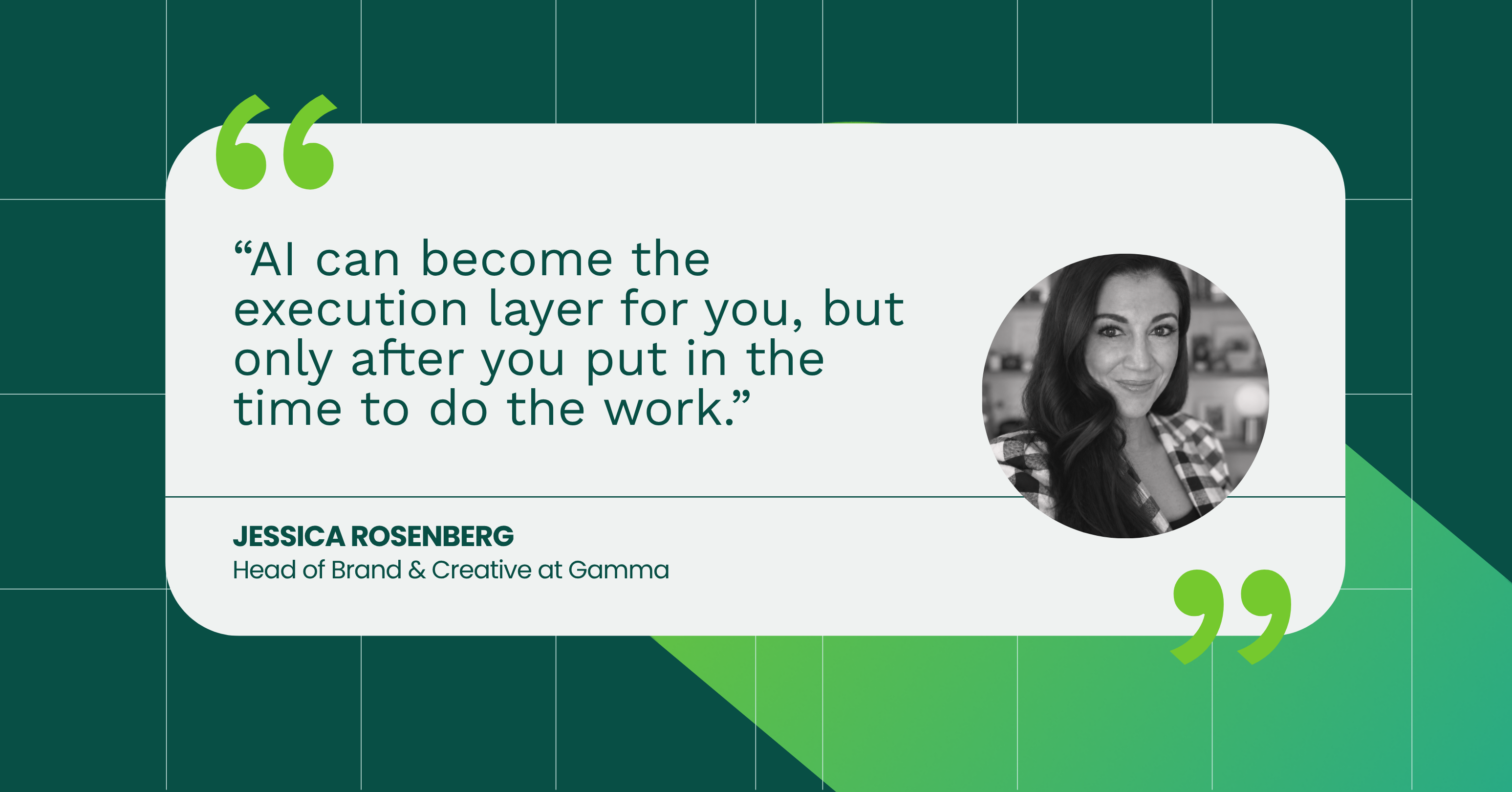
That changes more than how long it takes to write a blog post. Work that once required separate requests to content, creative, and paid can now happen together. But if the team still passes each piece from one function to the next, much of that speed gets lost in the handoffs.
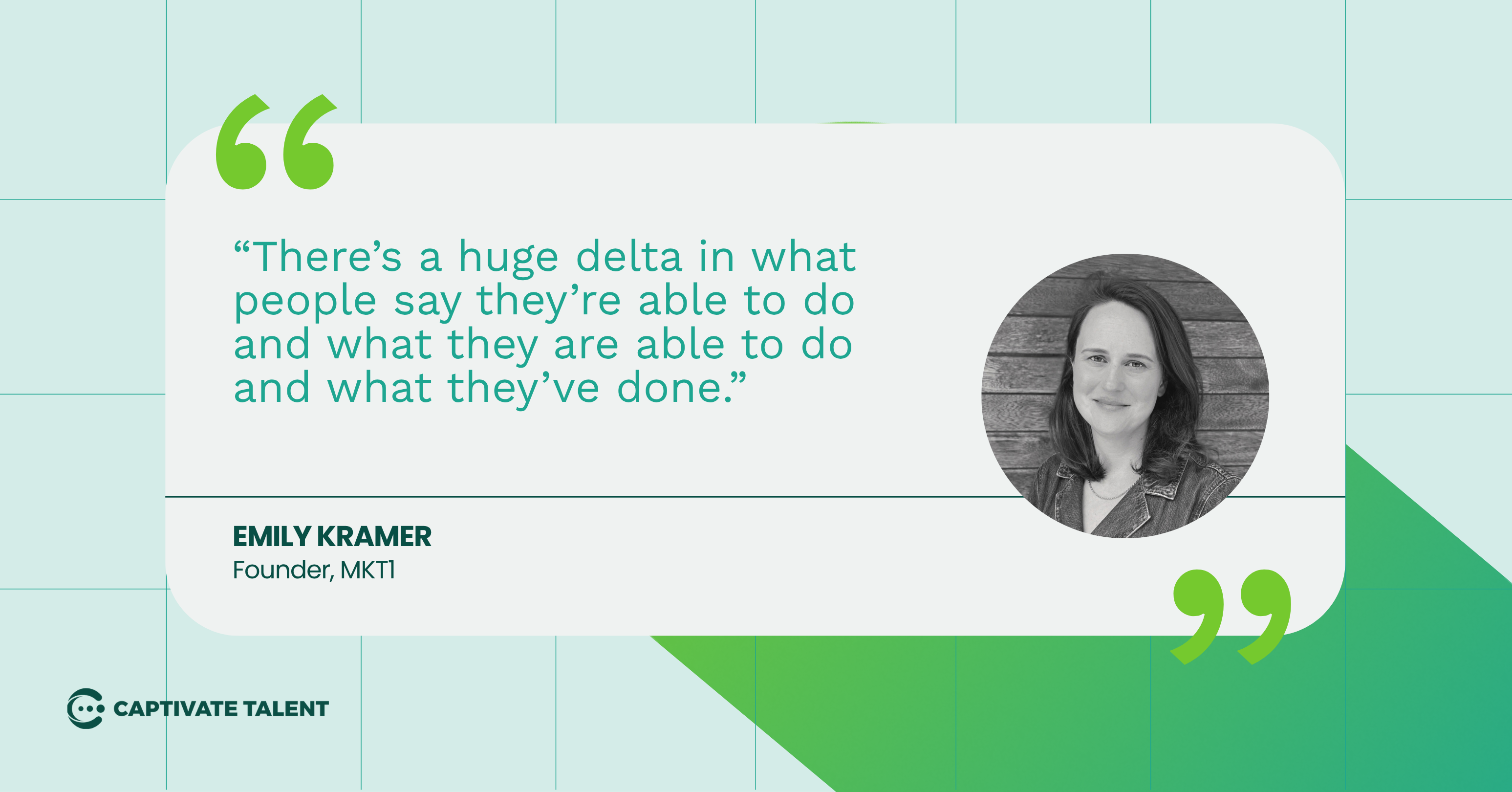
Emily Kramer (Founder of MKT1) put it directly: “Everything, the cycles are faster, and so there’s no time for these handoffs between individuals.”
This is where her “gen marketer” profile comes in: someone who understands how the pieces of marketing fit together and how to use AI to make them work faster. They can connect the message to the content, the content to distribution, and the results to what the team should try next. They also know how to organize the customer, product, and sales context that AI needs to do useful work.
That has real implications for how you build a team. Christy sees marketing teams getting smaller and more senior because experienced marketers can now take on a broader scope. She described working in a large marketing organization where campaign managers coordinated the content, product messaging, paid ads, and events. Their job was to bring the separate functions together into one campaign.
Today, she looks for marketers who can make those connections as part of their own work. A content marketer should think about where a piece belongs in the buyer journey and how it will reach people, alongside what it should say. With the right tools and judgment, that person can carry more of the work through themselves.
Giulia Gagliardi (VP of Marketing and Growth at Nory) has brought product marketing and brand under one senior leader. The team still has distinct areas of expertise, but they work on the same projects. Product knowledge shapes the brand work as it happens, and the brand perspective shapes how the product goes to market.
That structure, she said, is “giving us a velocity that we didn’t have before.”
But there is a limit to the speed argument. AI makes it easier to produce something before the team has agreed on what, exactly, it’s trying to accomplish. As Christy put it, “The guiding light for the project can’t be what AI can I learn. The guiding light for the project is what’s the goal.”
For an early-stage founder, this changes the hiring question. Before adding a person for each channel or deliverable, look at what an experienced marketer could own with the right AI setup and access to expertise where they need it. The ability to connect the work becomes more valuable when one person can take an idea further, get it into market sooner, and use what they learn to improve it.
AI changes how marketers execute. It doesn’t replace marketing judgment
A marketer can now get much further with an idea before needing more time, budget, or another person to help. Jessica described the shift from asking AI for individual outputs to building workflows and tools as professionally transformative. Her small team could make things that previously would have taken months or required expertise they didn’t have in-house.
But sometimes… friction is a good thing.
Some of those steps gave teams a reason to stop and think. Before briefing a designer or building a landing page, you had to work out what you wanted to say. AI makes it easier to get straight into making something, even when that part hasn’t been worked out yet.
Christy saw this happen with a research report at AirOps. Once the data came back, the team used Codex to crunch the numbers, draft content, and explore ways to animate the findings. By the time they came to her for feedback, they had a beautiful landing page with some cool interactive animations. They wanted to know whether she liked the design.
But they’d moved past an unresolved piece of the marketing work: deciding what the research actually told them and what they wanted readers to understand. When building the experience took longer and involved more people, that decision was harder to skip. Now the experience could be ready for review before anyone had agreed on what it needed to communicate.
If those decisions no longer have to happen before production can move forward, teams need to make room for them deliberately. Someone still has to define the audience, understand the customer’s problem, and decide what the work should communicate. The objective, positioning, measure of success, and standard for good work all need to be clear enough to guide what gets made and how it gets reviewed.
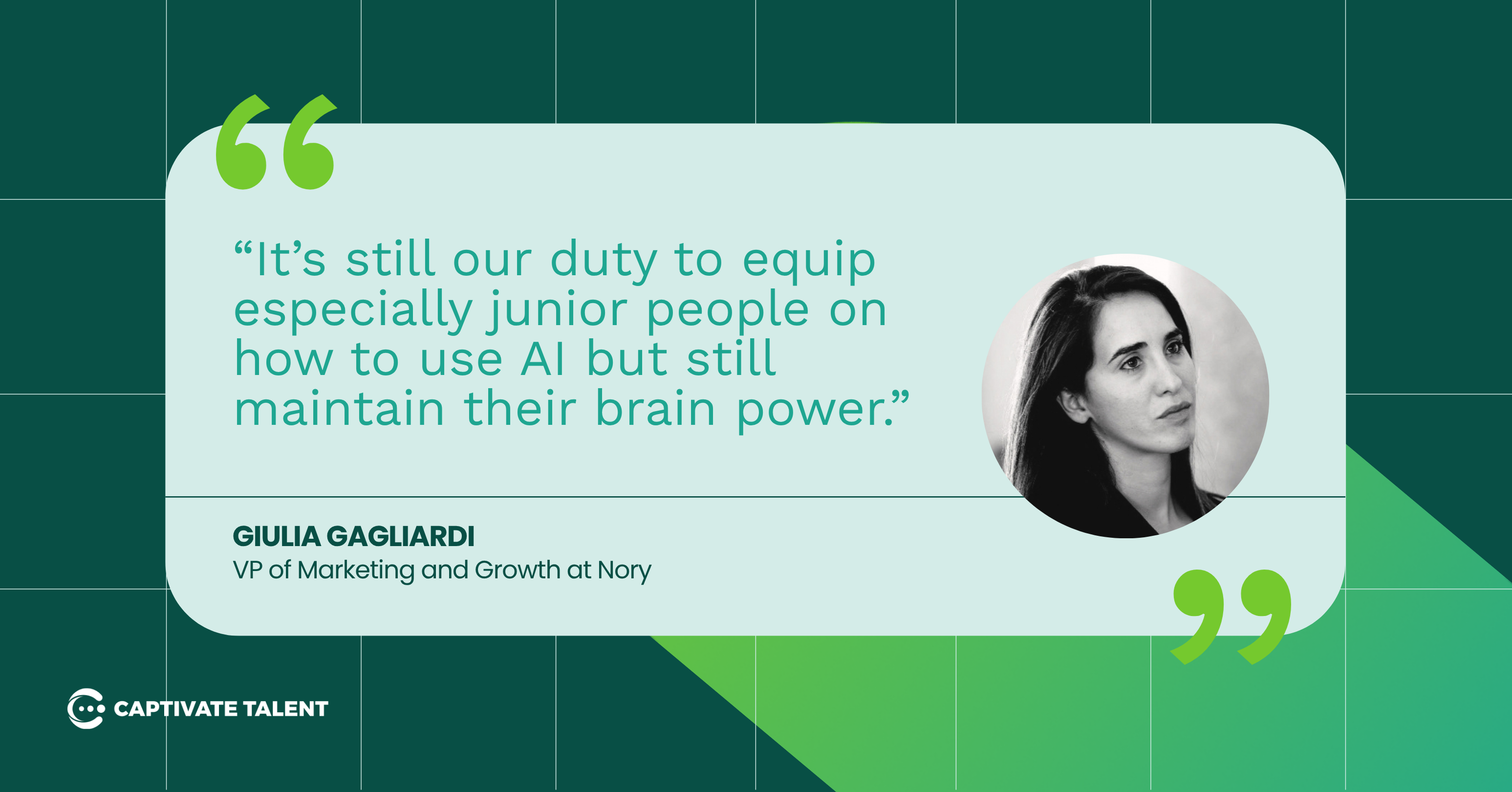
Jessica calls the documentation behind this a “context repository,” which she points out is a fancy term for work marketers already needed to do. For a launch, that means defining what the product does, who it’s for, what it solves, and the outcomes customers care about, along with the brand’s voice and tone. Those decisions give an agent something specific to work from. Leave them out, and it fills in the gaps with its own assumptions.
The same applies beyond an individual brief. Emily describes a living “marketing brain” that brings together context from sales, customers, and product so the team can build on what it already knows. That context needs to be captured and structured for AI to use it. Otherwise, each new piece of work starts without information the business has already learned.
This makes documenting the thinking part of the marketing work itself. A brief gives the system direction, and it gives the person reviewing the output a basis for deciding whether it actually does the job.
Being able to build the system doesn’t tell you whether someone can make those decisions well. A marketer can have a sophisticated AI workflow and still misunderstand the customer, choose the wrong message, or spend a week automating work that wasn’t especially important. The technical capability can make weak marketing thinking travel further, too.
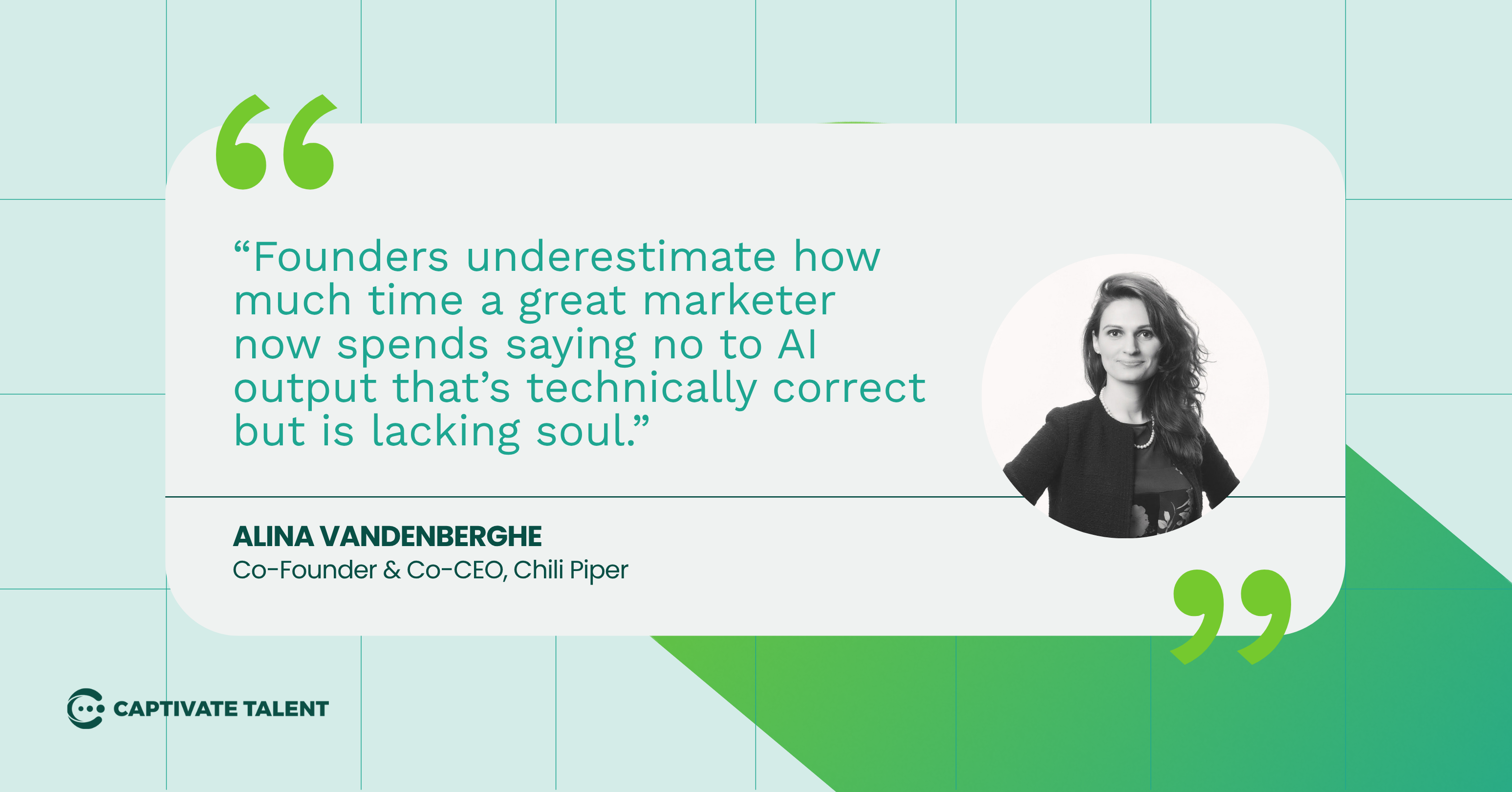
Alina Vandenberghe sees that judgment in what a marketer chooses to reject. “Founders underestimate how much time a great marketer now spends saying no to AI output that’s technically correct but is lacking soul.”
That’s Christy’s concern with evaluating people primarily on their AI stack or the agents they’ve built. You can get so interested in how someone made something that you miss whether they understood why it needed to exist. “The primary goal of anything you do within go to market still has to be the business result,” she said. They need to connect the work to that result and judge whether what they’ve produced is likely to help, including when using AI would get in the way.
A finished deliverable only shows you part of that. Kathleen wants to understand how someone reached their conclusion and where they challenged what AI gave them. A polished presentation could reflect careful marketing thinking, or it could mean someone accepted a convincing answer without examining it.
The same caution applies to newer practices like AEO and GEO. At Captivate, Matt is seeing them become requirements in marketing searches while the practices and their measurement are still changing. He puts more weight on someone’s actual experiments and their ability to explain what they tried, how they measured it, and what they learned. Familiarity with the terminology gives you much less to go on.
Even a marketer who uses AI thoughtfully will have limits to their expertise. Being able to produce design assets, write launch copy, and build a reporting workflow doesn’t mean they’re equally good at all three. A broader role can cover more work while still needing depth in the discipline that matters most to the business.
The balance depends on the role. Kathleen points to marketing operations as an area where strong AI fluency can let someone move incredibly fast, especially alongside a colleague with deeper marketing expertise. For brand and design, Jessica still looks for a trained eye and an understanding of the craft. Her two designers weren’t hired for being “AI-pilled.” They’ve worked AI into their process, but their ability to judge the work comes from knowing design.
That expertise can also sit somewhere quite different. At Blue Alpha, the technical infrastructure is covered by a GTM engineer, so Peter can put more weight on people who build relationships and trust with enterprise buyers. The systems give those people more capacity. Their value is still in what they can do in the room.
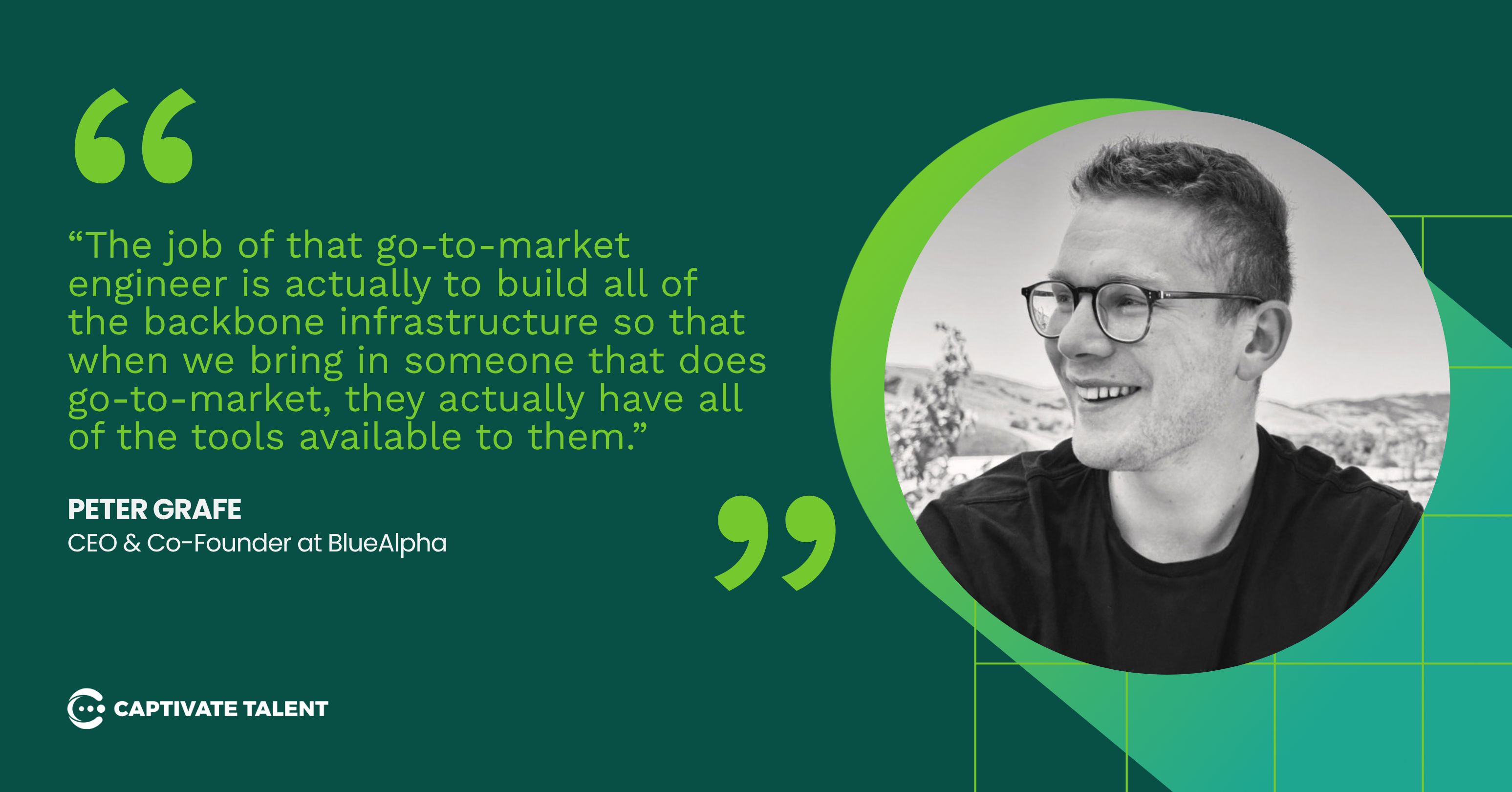
So when you broaden a role, you still need to be specific about where the person has to be genuinely good. AI may help them handle more of the surrounding work. It doesn’t remove the need to recognize when that work calls for someone with deeper expertise.
Hiring Rubric: How to define AI-Native marketing talent
Once you know what marketing expertise the role needs, you still need a way to distinguish between someone who uses AI regularly and someone who has substantially changed how they work with it. Both might describe themselves as AI-native. That leaves a lot for you to interpret.
In our Sales and RevOps guides, we could get more specific about AI fluency within individual roles and seniority. Marketing needs a broader framework here. Growth, product marketing, brand, content, creative, lifecycle, and operations each involve different work and different standards for doing it well. A detailed rubric for every discipline would be several guides of its own.
Instead, this rubric looks at how deeply AI has changed the way someone practices their craft:
- AI-Curious: Uses AI to accelerate individual marketing tasks. Their existing process is mostly the same, but parts of it move faster.
- AI-Active: Integrates AI into meaningful parts of a marketing workflow, with deliberate choices about where their own expertise and judgment belong.
- AI-Native: Redesigns the workflow around what humans and AI can now do together, connecting context, repeatable execution, human decisions, and feedback from results.
These levels describe AI fluency. You still need to assess whether the person is a good marketer for the job you’re hiring them to do. An AI-native content workflow won’t tell you whether someone has the positioning expertise you need in a product marketer.
The table below carries one content example across all three levels so you can see what changes. Apply the same distinctions to the work your hire will actually own.
How to interview and assess AI-Native Marketers
The rubric gives you a bar to hire against. In the interview, you need enough detail about someone’s actual work to figure out where they sit.
At Captivate, Matt starts with a straightforward question: “What specifically have you built with AI, and how do you use it in your daily workflow?” Pick one example from their answer and stay with it. Have them walk you through what they were trying to accomplish, where AI entered the process, and what they did themselves.
Then get into what happened along the way. Alina Vandenberghe (Co-Founder & Co-CEO at Chili Piper) asks candidates to reconstruct a campaign: the hypothesis, what surprised them, how the numbers changed, and what they did when those numbers moved in the wrong direction. She also listens for what AI got wrong. Specific problems and corrections tell her the person has actually been working through this.
You should come away understanding why they used AI where they did, what they had to change, and what result the work produced. Ask what they would do differently today, too. That gives you a much clearer picture of their fluency than knowing which tools they’ve tried.
Ask them to show you the process, not just the output
Once they’ve walked you through the project, ask to see the work behind it, wherever confidentiality allows. That might include the brief, research, context they supplied to AI, and the iterations that led to the finished piece. For a repeatable workflow, have them show you how the steps connect and where a person reviews or makes a decision.
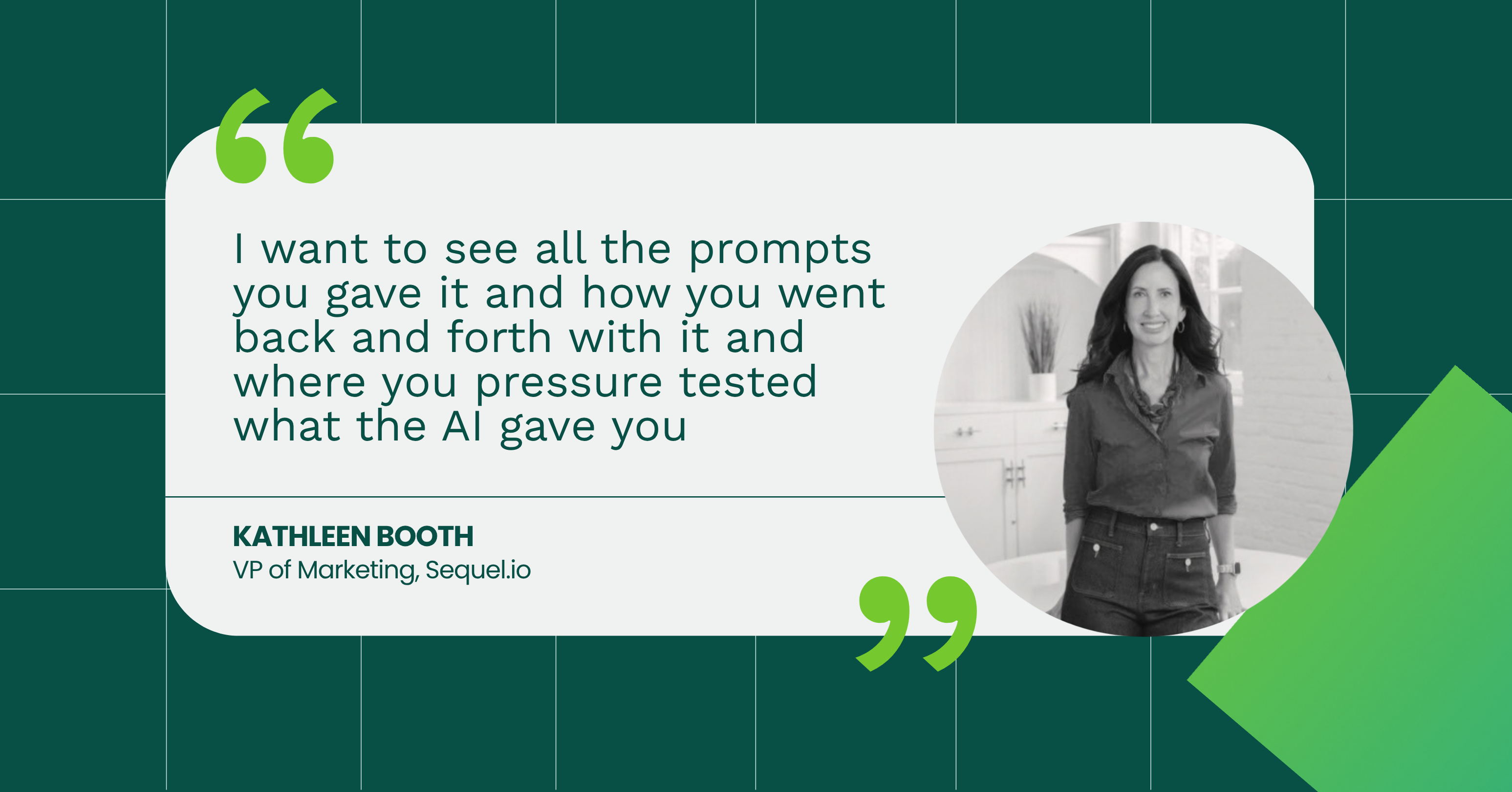
Kathleen asks to see the actual AI conversation. “I want to see all the prompts you gave it and how you went back and forth with it and where you pressure tested what the AI gave you,” she said. That lets you compare their account of the work with how they actually approached it.
Look at what they gave the model to work with, what they questioned, and what they changed. Did they notice an unsupported claim? Did they bring in customer evidence when the answer was too generic? Did they revise the direction, or mostly ask for a cleaner version of the same output? Those are different kinds of involvement, even if both produce a polished final piece.
The finished work still matters. Seeing how they got there helps you judge how much of its quality came from decisions they understood and could make again.
Give them a real marketing problem, and let them use AI.
Reviewing past work shows you how someone handled a problem they already know. A work sample lets you see how they approach something unfamiliar. If you expect them to use AI on the job, let them use it here. As Emily puts it, the ability you’re testing is whether they can build and work with AI. Writing without it is a different test.
Give them a realistic problem, a clear time limit, and enough context to get started without resolving every ambiguity for them. For example, share a frustrated customer’s Slack thread, an upcoming product update, excerpts from customer calls, and basic performance data. Then ask: “We’re launching this in two weeks. Show us how you’d approach the marketing problem.” Leave them some room to decide what work is needed rather than prescribing a deck or a set of assets.
Pay attention before they start producing. Alina uses a customer thread and product update in her own assessments, and watches the questions candidates ask: who the customer is, what the frustration actually was, and what the reader should feel. A polished announcement tells her much less if the candidate hasn’t clarified any of that.
You’re looking for how they establish the audience, objective, customer problem, message, and success criteria, then use AI to move the work forward. The exercise should make those choices visible, even if the finished work is still rough.
Pressure-test the work live
Once they’ve completed the exercise, talk through it together. Give them room to explain their approach, then pick a decision and go deeper. If they chose a particular audience, ask what in the customer evidence led them there. Follow their answer: what did they leave out, and why? What would make them reconsider?
Do the same with their AI use. Ask what changed between the first output and the final work, why they kept a particular step human, and where they would need another marketer’s expertise. If the project ran every month, what would they automate? What would they continue to review themselves? That helps you distinguish between someone who used AI to complete the assignment and someone who can design a repeatable way of working.
Then ask where they would look first if the work underperformed. Their answer should connect to the objective and assumptions behind their approach. Keep following the reasoning rather than working through a fixed list of questions. Someone might have a convincing explanation ready for the overall plan but struggle to explain a choice within it.
Green flags and red flags
This is the same approach we use in the Sales and RevOps guides: allow AI-assisted preparation, then use the live conversation to find out whether the candidate understands and owns the decisions they’re presenting.
Taken together, those steps should give you enough evidence to compare the candidate with the rubric. Look for patterns across what they say, what they show you, and how they respond when you go deeper.
Green flags
- Describes marketing workflows and outcomes, with tool names as supporting detail.
- Can show something they built and explain how it evolved.
- Explains what AI got wrong, how they caught it, and what they changed.
- Makes deliberate choices about what they own, what AI handles, and where another specialist is needed.
- Connects their AI use to customer insight, positioning, distribution, conversion, or another relevant marketing result.
- Measures the work and changes course when it isn’t working.
- Has adapted their workflows as AI capabilities have changed.
- Can walk you through the messy process behind the polished final piece.
Red flags
- Leads with a list of tools, but struggles to describe a specific workflow.
- Their examples stop at writing or researching faster, despite claiming to be AI-native.
- Presents AI as having worked perfectly, with no failures, corrections, or iteration.
- Assumes more automation means better marketing.
- Shows a technically impressive system without a clear marketing or business problem behind it.
- Starts producing before establishing the audience, objective, or message, as in Christy’s research-report example.
- Tries to automate everything, or insists their existing craft shouldn’t change.
- Talks about speed and volume without evidence of quality or results.
- Cannot explain the decisions once you move beyond the finished presentation.
A candidate who uses AI mainly for individual tasks may fit the AI-Curious level perfectly well. The concern is a gap between the level they claim and the evidence they can show. Use the rubric to name that level, then assess whether their marketing expertise and way of working fit the role.
Before you open up that marketing role
Before you open the role, get specific about the problem marketing needs to solve and the expertise that requires. AI gives you more options for how the work gets done, but someone still has to understand the customer, choose the direction, and know when the work is good enough to ship. Build the role around that responsibility, with a realistic view of what one person and their systems can cover.
Then use the rubric and interview process to find someone who can show you how they make those decisions and use AI to carry them through. That gives you a much clearer hiring bar than adding “AI-native” to a job description and hoping candidates know what you mean.